
Midway through Aja Gabel’s new novel, Lightbreakers, one of the book’s main characters—Noah, a quantum physicist who is haunted by the death of his young daughter, Serena—opens up about the experience.
“I never used to be afraid of dying,” he says. “Not more than anyone else. But when Serena was born, I felt so strongly that I had to stay alive for her, and I began to fear dying. I’d never felt that way before. And when we lost her, I realized there was another, equal feeling—that the only other thing I had to do besides stay alive was die before her. And I’d failed.”
Shortly after Serena’s death, Noah’s marriage to Eileen, a fellow scientist, ends.
Years later, which is where Gabel’s novel begins, Noah is remarried to Maya, an artist. The couple is on the verge of leaving their home in Los Angeles for Marfa, Texas, where Noah has accepted a position at the Janus Project—a secluded laboratory funded by an eccentric billionaire keen on unraveling the secrets of time travel.
Initially, the couple believes Noah’s hire is based on the merits of his research in quantum physics. But once they arrive in Marfa, they discover his academic credentials have little to do with the post. It is his past, specifically his daughter’s premature death, that makes him an ideal candidate for the experiment; and it is this trauma, including the dissolution of his marriage to Eileen, that the Janus Project is subliminally and explicitly exposing Noah to on a daily basis.
As the story progresses, Noah’s desire to reconnect with Serena propels readers through a complex tale about loss, grief, connection, and disconnection. Meanwhile, Maya’s growing sense of isolation, as well as her creative and professional frustrations, result in her own artistic and personal journey back home to Japan and a life she thought she had left behind.
In our conversation below, Aja and I discuss the benefits of incorporating fringe interests within your literary pursuits, what screenwriting has taught her about plot and pace within her fiction, and the questions mortality raises about art, life, and the relationships we struggle to maintain.
CALDER: Art has played a significant role in both your debut novel, The Ensemble, which followed the relationship between four musicians, as well as your latest book, Lightbreakers. Among the many things I admire about Lightbreakers is the way in which your characters’ own relationships to both science and art are constantly being interrogated and quietly evolving over the course of the story. Take us through how these two elements—science and art—took shape in the early drafts of Lightbreakers. Did you go in with these two specific fields in mind? Or did the drafting process present helpful surprises along the way?
GABEL: I think you know you’re drafting right if something emerges in a draft that surprises you. For me, that was definitely the art portion of this story. Science was always going to be a part of the novel, as Noah uses his understanding of science to either support or disprove claims that he is presented with. But I found that the best way for Noah to interrogate his own ideas about science—without me just writing out his arguments in summary—was to have a conversation partner in his wife who had a completely different way of understanding the world. To me, that paradigm felt like visual art.
I’ve been drawn to the Man of Science vs. Man of Faith trope, and when I started incorporating Maya’s art background into the story, I thought she’d obviously occupy the Man of Faith side of that argument. Looking at and understanding visual art requires an instinctual, primal, semi-conscious awareness of your own reactions. It seemed so clearly oppositional to the rigid rule-seeking nature of science. But the more I delved into Noah’s field of quantum physics, the more I saw that a lot of its principles also require a faith in the unseen.
In a way, both science and art are organizing principles to express what seems unfathomable. And, of course, Noah is trying desperately to understand unfathomable loss. Maya is trying desperately to love someone whose very center keeps slipping away into that unfathomable space. The more I drafted, the more I began to understand that perhaps both Noah and Maya were occupying the Man of Faith positions, and the journey would be their respective paths to being okay with what they couldn’t know, and at peace with what they believed anyway.
CALDER: Could you talk more about Noah’s character as it relates to his field of study. How familiar were you with quantum physics prior to your initial draft and how did you further familiarize yourself with the science?
GABEL: I was not familiar with quantum physics prior to beginning this project, but I’d always been interested in it. Noticing your fringe interests is one way to know what areas of research you might be willing to immerse yourself in for long enough to complete a novel. Because I had to immerse myself. But before I did any research, I wrote a loose draft. I didn’t want the research to necessarily guide my emotional arcs, at least not at first. I had to figure out what I was writing about before I searched for those answers in the research. Anything where I needed technical information, I put placeholders. And then I dove into research.
I began by reading physics books by Carlo Rovelli, Michio Kaku, and Roger Penrose, and I also found YouTube to be a helpful resource. There are lots of pop physics explainer videos on there, which help make otherwise opaque concepts tangible. I kept a long Google Doc of interesting ideas, and after I had a handle on those generally, I reached out to friends to see if anyone knew any physicists I could talk to. Many were willing to talk, and at that point I had direct questions I could ask them, so I wouldn’t waste their time during the calls figuring out what I wanted to ask them.
What’s unpredictable but most helpful is that during the research phase, I found some answers for placeholders, but I also found new ideas for the novel. For example, there’s a discussion of black holes in the book, but it wasn’t until I read Carlo Rovelli’s nonfiction book White Holes that I reframed that discussion entirely, and it actually helped me figure out the ending of the story. And that came very late in the process, towards the end of primary editing. Because the research phase isn’t really a phase; it’s ongoing. Which is why I wanted to hold off on beginning the phase until I was sure how I wanted the book to feel.
CALDER: Let’s talk about the book’s feel and tone. This is a character-driven novel that is fearless in its examination of grief. But it’s also a novel that artfully manages plot. And through the combination of character and plot, you create this wonderful tension that propels the reader forward in a way that isn’t always the case with literary fiction. How were you thinking about those two elements as you went into this project, and how, if at all, did it change over the course of writing Lightbreakers?
GABEL: Thank you so much for saying so. It has historically been difficult for me to inject my literary fiction with a propulsive plot, because, as you said, it’s not necessarily a requirement for the genre. My first novel was very character-driven, and I wanted this one to have a plot that was easily explainable. But it was a process of understanding the shape of the narrative pulleys and levers.
In early drafts, the inciting incident of the couple moving to Marfa didn’t happen for several chapters, and I kept having to move that closer and closer to the beginning to get the plot rolling. Another example was deciding when Noah would first “fold” or engage in time travel, because I knew after that point the plot would have to move faster, because everything would have changed. Putting that in the middle of the book helped me understand what the plot arc looked like, events in the first half building towards this inevitable fold, and events of the second half happening because of or in spite of it.
Another way of thinking of it is the first half moves with tension, and the second half moves with cause and effect. Of course, there are a million ways to slice it, but I will say my screenwriting career has helped me with thinking about plot and narrative shapes. A screenwriter’s concern is always some version of “what is the scene/episode promising?” and “how does it undermine or deliver?” Because the answers to those questions will propel a viewer through the story. I applied those to this novel-writing process almost intuitively.
CALDER: I love how specific you are about some of the concerns a screenwriter brings to the table in terms of a story’s movement, scene and delivery. In what ways did your literary background benefit your entry into the screenwriting world and how did it require you to unlearn or put aside some of your novelist instincts?
GABEL: This is the million dollar question, isn’t it? I don’t know that the answer is static or black and white, but I’ve noticed that in writers’ rooms or in writing scripts, what I’m really drawn to is understanding the small moments, the small shifts in a situation that signify more tectonic change. I know for sure that comes from a literary background, where we are so attuned to thinking in those tiny but monumental changes in a character’s life.
With screenwriting, those moments can sometimes be too small to register, and you have to find a way to dramatize it in a more physical way. But I often find it useful information regardless: What’s the smallest way your character’s situation could irrevocably change? The answers to that are usually very real.
As far as the novelist’s instincts I had to put aside — how much time do we have? In novels you have all the time for all the words, and in scripts you don’t, and learning that brevity was tough for me. Describing interiority in an exacting way is probably what I enjoy most about novel writing, and not being able to do that in scripts is sometimes painful. But ultimately, I think learning to flex different writer muscles has made me a better and more aware writer overall.
CALDER: I’d like to shift our focus to grief. So much of this novel is dealing with the grieving process—in this case the loss of a child—and the ways in which such loss redefines and changes who we are—both as individuals and collective units. This book hit me in ways I haven’t previously experienced as a reader. There were scenes where I felt something akin to claustrophobia for your characters, recognizing that there was no way out of this new reality for them. And of course, the novel explores the extent a person will go to try and change the course of such reality. I know much of this book was informed by your own experiences of losing loved ones. I wonder if you’d be willing to speak to the process of sharing these experiences with your characters.
GABEL: I really appreciate this question. I’m more than happy to talk about this because I think, in a way, I wrote this book so I could talk about this. When I was twenty years old, I lost both my father and brother in quick succession, and for years and years, I felt like I had no one to talk to about it. I felt so alone in that grief, and it was a decade or more later that I realized that’s the trick of grief. It’s a universal experience that is deeply isolating. It warps time and gives way to magical thinking.
I was desperate in my twenties and into my thirties to fix the problem of loss, to find an impossible solution to a real problem. I tried to write about this for a long time, in different modes, but it wasn’t until I understood that grief can be connective, indeed should be connective, that I understood the shape of the grief story. These characters’ losses don’t stop time where it happened but help articulate all the time that comes after, which means that the person is immortal. Which is all I wanted when I was younger, drowning in grief.
I know some writers are suspicious of writing leading to personal catharsis, but I do think every good story starts with a question—in my case, the question of “How can you survive grief?”—and finding that answer through writing a novel is something close to catharsis.
As for the child loss specificity, I haven’t had that particular experience, and I really wanted to make sure I did right by those who had. To that end, I read a lot, and found both Rob Delaney’s memoir and Yiyun Li’s memoirs full of grace, revelation, and insight.
CALDER: Thank you for sharing this. One of the things I enjoy most about watching artists I admire grow within their field is getting to see them less confined by the expectations of others within said field. So it’s refreshing to hear you speak about this project as being cathartic.
GABEL: You know, the farther I am from the publication of this book, the more that feels true to me. There’s a large part of the publication process that makes you look at your book as a consumable product instead of a work of art, when a good novel is, at best, probably some mixture of both. Expectations are heavy and present during the product part. But the more I talk about the book’s origins and the more I hear from readers who have connected with it, the more I see that what’s resonating is that I tried to do something a little bigger here with my second novel, something more personal and that was somewhat of a creative reach for me. It’s good for me to remember those elements of the process are what last.
CALDER: I want to circle back to an earlier point you made: immortality through grief. There is a heartbreaking exchange between Eileen, who is Noah’s ex-wife and a fellow scientist, and Prem, who is Eileen’s love interest a decade after her and Noah’s divorce. In the scene, Prem dismissively refers to Serena as Eileen’s “dead daughter,” which hit me as a reader on so many levels. It’s insensitive, cruel, and gross. But it’s also absurd and meaningless as it relates to Eillen’s continued connection to her daughter all these years later. It’s such a revealing and shocking moment within the story. Obviously, as writers, empathy is a useful tool to have in our toolkit. You don’t have to be a parent to find your way to a powerful scene such as this. But as a fellow parent and writer, I am curious where you were in the process of this project before becoming a parent, and how, if at all, your transition into parenthood offered new insights or clarity on any of your characters.
GABEL: When I began and sold this unfinished novel, I was not a parent. By the time I finished it, I was a parent of two. And once I had my first child, I felt foolish having pinned the source of grief for my character on the death of a child. It seemed like not only an impossible experience to try to accurately represent, but also an experience I wanted to go nowhere near. And it’s not because I think some giant empathy portal opened up for me when I became a parent (though I did become more empathetic about situations such as, say, babies on planes) but because becoming a parent puts you right up against the razor’s edge of mortality.
I put these words in Noah’s mouth, but when I had a baby, I suddenly felt both that I had to stay alive for my child, and also that I had to die first. Before, I’d never felt either strongly. And I think that proximity to your own mortality is exceedingly useful as a writer and as a human. For this book, it was really useful in understanding how the death of a child would feel biologically wrong and a cosmic mistake, something my characters might go great lengths to correct.
It was also useful in understanding how you might go to great lengths to carefully construct your life such that you never fall back into the depths of child loss grief, which is what Eileen has done. That careful construction also includes rules around the language of loss, which I’ve always found a little confounding: the euphemism of “passed away” has always struck me as too soft and the unadorned word “dead” as too hard. Having Prem throw the rules of grief language in her face was how I saw her life beginning to crack.
CALDER: Could you speak more to this notion of proximity to mortality as a benefit to writers (and non-writers).
GABEL: Well, I think being close to mortality, to both life and death, is similar to grief in that it opens you up to great pain, but also to wonder and awe at the fact of being alive and connected at all. Because if you are exposed to the worst of it—the fact that we’ll all die and the internal story will stop, the fact that if we’re lucky we will be leaving people behind, the fact that if we’re lucky we are left behind—you are inevitably led to the mysterious. How are we alive in the first place? What happens when we die? What is the value of human connection, if this all ends? Going to wonder and awe has always helped me answer these impossible questions: people are animals, people are energy, and people are flawed entities that try anyway. And I think starting from a place of curiosity, of reaching for something unreachable, is a good position for a writer, that the writing is an act of discovery. Beginning with a predetermined answer often leads to boring writing, or at least is a boring process for me. A good project usually starts with trying to fathom the unfathomable.
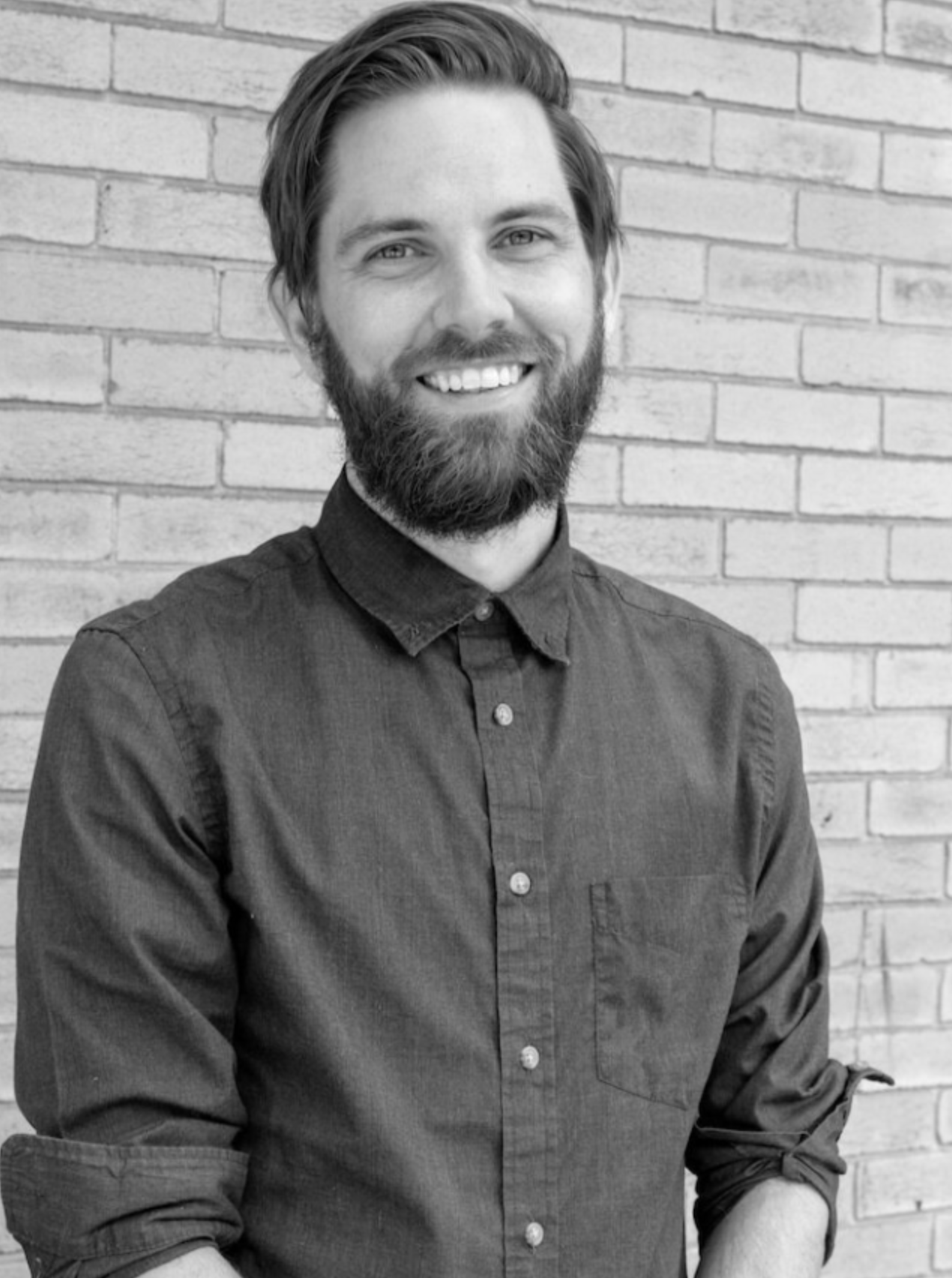
 AJA GABEL is the author of Lightbreakers and The Ensemble, both from Riverhead Books. Her prose can be found in The Cut, LA Times, Buzzfeed, BOMB, and elsewhere. She studied writing at Wesleyan University and the University of Virginia, and has a PhD in Literature and Creative Writing from the University of Houston. Aja has been the recipient of awards from Virginia Center for the Creative Arts, the Sewanee Writers’ Conference, and the Fine Arts Work Center in Provincetown. Her short story “Little Fish” was adapted into a feature film, and she has written and developed several other screenwriting projects. She currently lives and writes in Los Angeles.